A recent economic study projects over 2,000 new permanent jobs and approximately 5,500 construction jobs would be created by this development — jobs for Allen County residents. That’s a paycheck for family, friends and neighbors.
Source: CBRE (2025)


“Shall inland casino gambling be permitted in Fort Wayne Allen County?”
A YES vote would give Allen County the opportunity to compete for a casino license, create thousands of new jobs and generate millions in new revenue for Allen County — without raising taxes. Any casino development would still require approval from local officials and the Indiana Gaming Commission before moving forward.
“Indiana Study for Relocation of Gambling Operations,” Spectrum Gaming Group (2025); “Greater Fort Wayne Area Casino Analysis,” CBRE (2025)
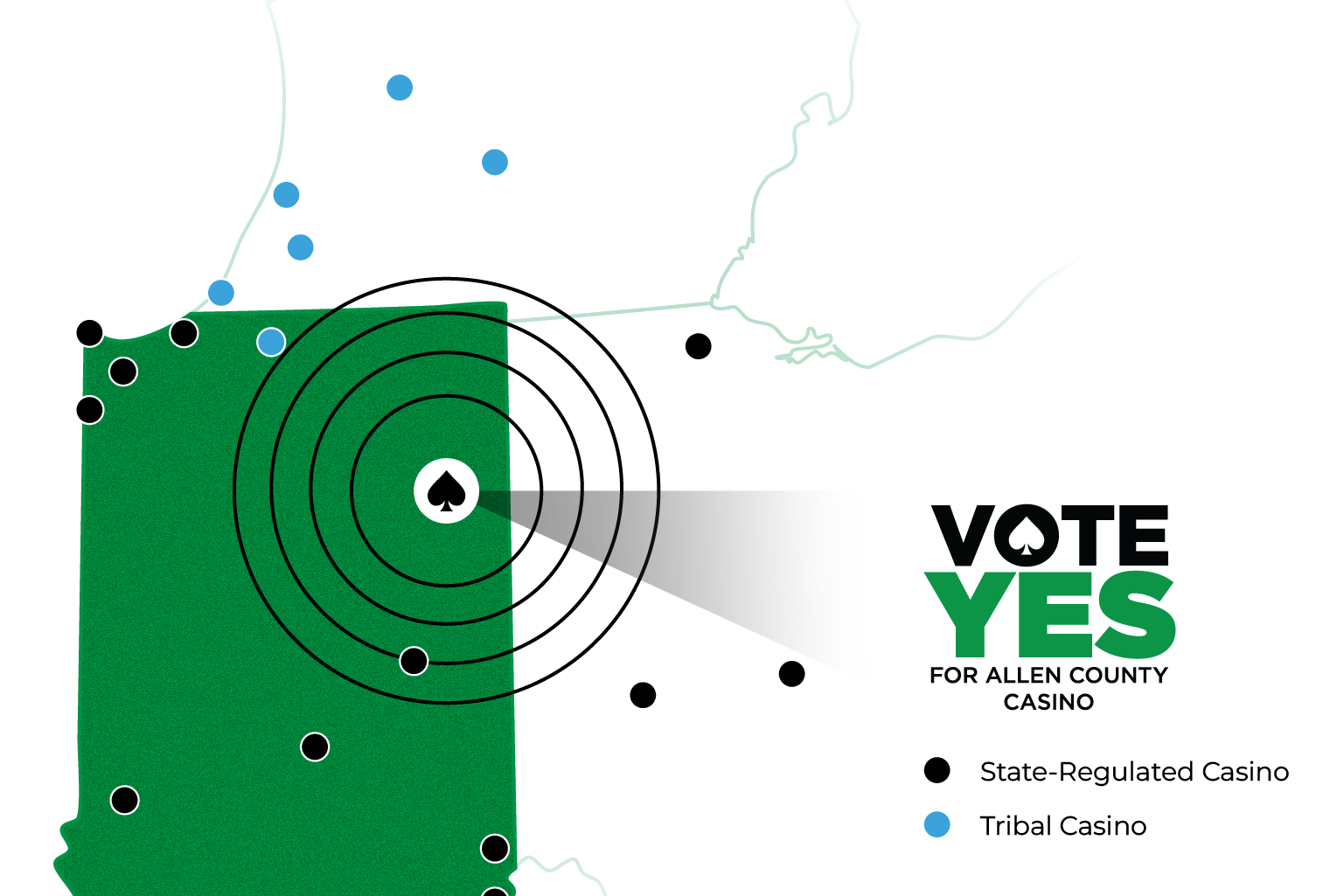
Studies show much of Northeast Indiana’s gaming-related spending currently benefits casino communities in Michigan and Ohio — not Allen County. A YES vote lets our community compete to bring that revenue back and put it to work here for our residents.
Source: “Indiana Study for Relocation of Gambling Operations,” Spectrum Gaming Group (2025); “Greater Fort Wayne Area Casino Analysis,” CBRE (2025)
Similar ballot measures are being voted on in DeKalb and Steuben counties. Only counties that pass their ballot measure may apply for the license, and only one license will be granted among the three counties. If Allen County votes NO, we lose our chance to compete for the license.
No. A YES vote would only allow Allen County to compete for a casino license. Any future development would still require approval from local elected officials and the Indiana Gaming Commission.
Yes. Gaming operations in Indiana are regulated by the Indiana Gaming Commission and subject to ongoing state oversight, licensing and compliance requirements. Indiana maintains one of the most highly regulated gaming industries in the country.
Independent studies project a new casino development would generate more than $100 million in new revenue annually through gaming taxes, sales taxes, property and room taxes on the casino, and income taxes. More than $41 million of that would stay local, supporting infrastructure, public safety and schools, expanded mental health services and more — all without raising taxes.
Community needs and local priorities have been identified as potential uses for new revenue. That could include infrastructure improvements, investments in public safety and mental health services, and funding for local schools and other priorities that support Allen County communities.
These are legitimate concerns, and Indiana takes them seriously. This opportunity would bring thousands of new jobs and new revenue to fund community priorities — including public safety and mental health services — without raising taxes, all while remaining subject to strict state and local oversight. The Indiana Gaming Commission enforces strict responsible gaming requirements for all licensed operators, including self-exclusion programs, addiction treatment referrals and compliance monitoring. Indiana’s gaming regulatory framework is among the most robust in the country.
Independent studies found that Northeast Indiana is currently underserved by the state’s casino footprint, with much of the region’s gaming-related economic activity benefiting communities outside Allen County — including casino communities in Michigan and Ohio. If it passes, the referendum will allow Allen County to compete for a license to pursue a casino project that would keep gaming revenue here to benefit our community, rather than continue losing those dollars to other regions.
Allen County would no longer be eligible to pursue the casino license. If no county in the region passes its ballot measure, no license will be awarded. Voting NO means giving that opportunity to DeKalb or Steuben County instead.
Yes, and the process and outcome would be very different from the ballot question before Allen County voters. A tribal casino would be governed by federal law and would not require approval from state or local officials.
The revenue structure would also differ. Tribal gaming revenue is directed to the tribe for governmental purposes under federal law, not distributed to state and local governments the way commercial casino revenue is.
A commercial casino like the one being proposed on the November ballot would be subject to Indiana’s gaming tax structure, with revenue flowing to the state and local governing bodies, and would require approval from local elected officials before moving forward. A YES vote gives Allen County the opportunity to pursue that outcome — with local input, local oversight and local revenue sharing built in.